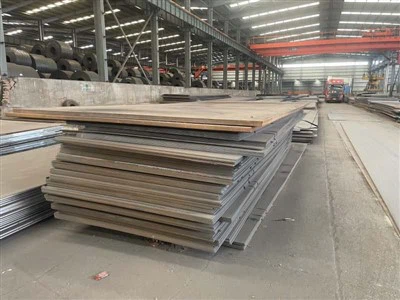
Hey there! As a supplier of angle steel plates, I've been in the game for quite a while, and I've seen firsthand how crucial these materials are in the aerospace industry. In this blog, I'm gonna dive into the strict requirements for angle steel plates in aerospace applications.
First off, let's talk about the basics. Angle steel plates are L - shaped structural components that are used in a wide range of applications, from building frames to machinery. But when it comes to aerospace, the stakes are way higher. The environment in aerospace is extremely harsh, with high - speed flight, extreme temperatures, and intense mechanical stresses. So, the angle steel plates used here need to meet some really tough standards.
Material Quality
One of the most important requirements is the material quality. Aerospace - grade angle steel plates are typically made from high - strength alloys. These alloys are carefully formulated to have excellent mechanical properties. For example, they need to have high tensile strength, which means they can withstand a lot of pulling force without breaking. This is crucial during take - off and landing, when the aircraft experiences significant stress.
Another key property is the yield strength. The yield strength determines the maximum stress a material can withstand before it starts to deform permanently. In aerospace, we can't afford any permanent deformation, as it could compromise the safety and performance of the aircraft.
When it comes to specific materials, we often supply Q335B Angle Steel Plate and Q235B Angle Steel Plate. These are popular choices because they offer a good balance of strength and cost - effectiveness. The Q335B has a higher yield strength compared to the Q235B, making it suitable for applications where higher stress levels are expected.
Precision Manufacturing
Precision is everything in aerospace. The angle steel plates need to be manufactured with extremely tight tolerances. Even a small deviation in dimensions can cause major problems. For instance, if the angle of the L - shape is off by a few degrees, it could lead to improper fitting of the components, which might affect the overall structural integrity of the aircraft.
The surface finish of the angle steel plates also matters a great deal. A smooth surface finish reduces aerodynamic drag, which is essential for fuel efficiency and high - speed flight. Any rough spots or irregularities on the surface could create turbulence, increasing drag and reducing the aircraft's performance.
Corrosion Resistance
The aerospace environment exposes angle steel plates to a variety of corrosive agents. High - altitude flight means exposure to moisture, oxygen, and sometimes even chemicals from the atmosphere. Corrosion can weaken the material over time, leading to structural failures.
To combat this, the angle steel plates need to have excellent corrosion resistance. This is usually achieved through special coatings or treatments. For example, some plates are coated with a layer of anti - corrosion paint or a protective metal alloy. These coatings act as a barrier between the steel and the corrosive environment, preventing rust and other forms of corrosion.
Certification and Testing
In the aerospace industry, certification is a must. All angle steel plates need to meet strict industry standards and regulations. Before they can be used in an aircraft, they must pass a series of rigorous tests.
Non - destructive testing methods are commonly used to check for internal defects in the material. Techniques like ultrasonic testing, X - ray inspection, and magnetic particle testing can detect flaws such as cracks or voids that might not be visible to the naked eye.
Mechanical testing is also carried out to verify the material's properties. Tensile tests, hardness tests, and impact tests are used to ensure that the angle steel plates have the required strength, hardness, and toughness.
Fatigue Resistance
Aircraft go through countless cycles of take - off, flight, and landing, which subjects the angle steel plates to repeated stress. This can lead to fatigue, a phenomenon where the material weakens over time due to cyclic loading.


To ensure long - term reliability, the angle steel plates need to have high fatigue resistance. This is achieved through proper material selection and heat treatment processes. Heat treatment can improve the microstructure of the steel, making it more resistant to fatigue cracks.
Thermal Stability
The aerospace environment involves extreme temperature variations. During high - speed flight, the exterior of the aircraft can heat up significantly due to air friction, while the interior may need to be kept at a comfortable temperature for passengers and crew.
The angle steel plates need to have good thermal stability. They should be able to maintain their mechanical properties over a wide range of temperatures. This means that they shouldn't become brittle at low temperatures or lose their strength at high temperatures.
Conclusion
As you can see, the requirements for angle steel plates in aerospace applications are incredibly strict. From material quality and precision manufacturing to corrosion resistance and fatigue resistance, every aspect is carefully considered to ensure the safety and performance of the aircraft.
If you're in the aerospace industry and looking for high - quality angle steel plates that meet all these requirements, I'd love to have a chat with you. Whether you need Q335B Angle Steel Plate or Q235B Angle Steel Plate, we've got you covered. Reach out to start a discussion about your specific needs and how we can provide the best solutions for your aerospace projects.
References
- ASME Boiler and Pressure Vessel Code
- ASTM International Standards for Steel Products
- Aerospace Industry Association Technical Specifications