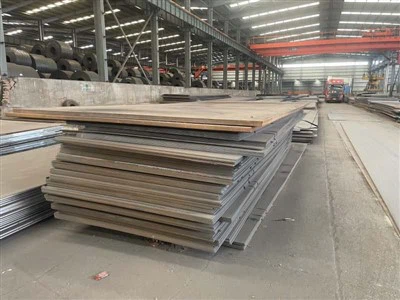
Hey there! I'm a supplier of rebar steel, and one question I get asked a lot is, "What is the maximum stress that rebar steel can withstand?" Well, let's dive right into this topic and break it down.


First off, it's important to understand what stress means in the context of rebar steel. Stress is basically the force applied to the rebar per unit area. When we talk about the maximum stress it can withstand, we're referring to the point at which the rebar starts to deform permanently or even break.
The maximum stress that rebar steel can handle depends on several factors. One of the most crucial ones is the type of rebar. There are different grades of rebar steel, and each grade has its own unique properties and maximum stress limits.
For example, let's take a look at two popular grades: HRB 400E and HRB 500E. These are pretty common in construction projects.
HRB 400E rebar is known for its good balance of strength and ductility. It can withstand a certain amount of stress before reaching its limit. On average, HRB 400E rebar typically has a yield strength of around 400 megapascals (MPa). Yield strength is the stress at which the rebar starts to deform. Once it goes beyond this point, the deformation becomes permanent.
Now, the ultimate tensile strength, which is the maximum stress the rebar can withstand before it breaks, is usually higher than the yield strength. For HRB 400E, the ultimate tensile strength is often in the range of 540 MPa or more. But it's important to note that these values can vary depending on the manufacturing process and the quality control of the steel.
Moving on to HRB 500E rebar. As the name suggests, it's a higher-grade rebar compared to HRB 400E. HRB 500E has a higher yield strength, usually around 500 MPa. This means it can handle more stress before it starts to deform. The ultimate tensile strength of HRB 500E is also higher, often reaching values over 630 MPa.
Another factor that affects the maximum stress a rebar can withstand is the condition it's in. If the rebar is corroded, its strength can be significantly reduced. Corrosion eats away at the steel, weakening its structure. So, in environments where there's a high risk of corrosion, like coastal areas or industrial sites, it's crucial to use proper protective coatings on the rebar.
The diameter of the rebar also plays a role. Generally, thicker rebar can withstand more stress than thinner ones. This is because there's more cross-sectional area to distribute the force. But it's not just about the diameter; the shape of the rebar, such as the ribs on it, can also affect how it distributes stress. The ribs help to bond the rebar with the concrete, which is important for the overall strength of the structure.
In addition to the type of rebar, its condition, and diameter, the way it's installed and used in a construction project can also impact its maximum stress capacity. For example, if the rebar is not properly placed or secured in the concrete, it may not be able to perform as expected. The design of the structure itself is also crucial. Engineers need to calculate the loads and stresses that the rebar will be subjected to and choose the appropriate grade and quantity of rebar accordingly.
Now, you might be wondering why all this matters. Well, in construction, using rebar that can withstand the required stress is essential for the safety and durability of the structure. Whether it's a high - rise building, a bridge, or a simple foundation, the rebar needs to be able to handle the forces acting on it. If the rebar fails under stress, it can lead to serious structural problems, including collapses.
As a rebar steel supplier, I'm always working to ensure that the rebar I provide meets the highest quality standards. We test our products regularly to make sure they have the right strength and other properties. Our team also provides technical support to our customers, helping them choose the right type of rebar for their projects.
If you're involved in a construction project and need high - quality rebar steel, I'd love to have a chat with you. We can discuss your specific requirements, the grade of rebar that would be best for your needs, and how we can ensure that you get the best product at a competitive price.
In conclusion, the maximum stress that rebar steel can withstand depends on multiple factors such as the type, condition, and diameter of the rebar, as well as the construction environment and installation methods. By understanding these factors, you can make informed decisions when it comes to choosing the right rebar for your project. Don't hesitate to reach out if you have any questions or are interested in purchasing rebar steel from us.
References
- "Steel Reinforcement for Concrete Structures" by ACI (American Concrete Institute)
- "Reinforcing Bars and Welded Wire Reinforcement: Production, Properties, and Applications" by the Steel Foundation