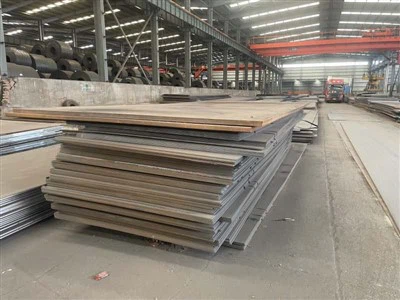
Hey there! As a supplier of Bridge Steel Plate, I often get asked about the different elements that go into making these plates so strong and reliable. One element that plays a crucial role in Bridge Steel Plate is molybdenum. In this blog post, I'll be diving into what molybdenum is and its role in Bridge Steel Plate.
What is Molybdenum?
Molybdenum is a silvery-white metal that is extremely hard and has a high melting point. It's often used as an alloying agent in steel because it can enhance the steel's strength, toughness, and resistance to corrosion and wear. When added to steel, molybdenum forms various carbides and other compounds that help improve the steel's properties.
Role of Molybdenum in Bridge Steel Plate
1. Increasing Strength and Hardness
One of the primary roles of molybdenum in Bridge Steel Plate is to increase its strength and hardness. Molybdenum forms carbides within the steel matrix, which act as barriers to the movement of dislocations. Dislocations are defects in the crystal structure of the steel that can cause it to deform under stress. By impeding the movement of dislocations, molybdenum carbides make the steel stronger and harder, allowing it to withstand the heavy loads and stresses that bridges are subjected to.
For example, in Q420qD High Strength Low Alloy Steel, molybdenum is added to enhance its strength. This type of steel is commonly used in bridge construction because it can provide the necessary strength while keeping the weight of the bridge relatively low.
2. Improving Toughness
In addition to increasing strength and hardness, molybdenum also improves the toughness of Bridge Steel Plate. Toughness is the ability of a material to absorb energy and deform plastically before fracturing. A tough steel is less likely to crack or break under sudden impacts or dynamic loads, which is crucial for bridge safety.
Molybdenum helps improve toughness by refining the grain structure of the steel. A finer grain structure means that there are more grain boundaries, which can act as barriers to crack propagation. When a crack encounters a grain boundary, it has to change direction, which requires more energy and makes it more difficult for the crack to grow.
3. Enhancing Weldability
Weldability is an important property for Bridge Steel Plate because bridges are often constructed by welding individual steel components together. Molybdenum can enhance the weldability of steel by reducing the risk of cracking in the heat-affected zone (HAZ) during welding.
During the welding process, the HAZ is subjected to high temperatures, which can cause changes in the microstructure of the steel. These changes can make the HAZ more brittle and prone to cracking. Molybdenum helps to minimize these changes by stabilizing the microstructure and reducing the formation of hard and brittle phases in the HAZ.
For instance, Q345qD High Strength Low Alloy Steel contains molybdenum to improve its weldability. This allows for easier and more reliable welding during bridge construction.
4. Corrosion Resistance
Bridges are exposed to various environmental conditions, including moisture, oxygen, and pollutants, which can cause corrosion. Molybdenum can improve the corrosion resistance of Bridge Steel Plate by forming a passive oxide layer on the surface of the steel.
This passive oxide layer acts as a barrier, preventing oxygen and moisture from reaching the underlying steel and reducing the rate of corrosion. Molybdenum also enhances the pitting resistance of the steel, which is important in environments where there are chloride ions, such as near coastal areas.
How Much Molybdenum is Added?
The amount of molybdenum added to Bridge Steel Plate depends on the specific requirements of the steel and the intended application. Generally, the molybdenum content in Bridge Steel Plate ranges from 0.1% to 1%. A higher molybdenum content can provide greater strength, toughness, and corrosion resistance, but it also increases the cost of the steel.
Bridge designers and engineers carefully consider the balance between the desired properties of the steel and the cost when determining the appropriate molybdenum content. They also take into account other factors, such as the location of the bridge, the expected loads, and the environmental conditions.
Conclusion
Molybdenum plays a vital role in Bridge Steel Plate by increasing its strength, hardness, toughness, weldability, and corrosion resistance. These properties are essential for ensuring the safety and durability of bridges. As a Bridge Steel Plate supplier, I understand the importance of using high-quality materials with the right alloying elements, like molybdenum, to meet the demanding requirements of bridge construction.
If you're in the market for Bridge Steel Plate and want to learn more about how molybdenum and other elements can benefit your project, feel free to reach out. We can discuss your specific needs and provide you with the best solutions for your bridge construction.


References
- ASM Handbook, Volume 1: Properties and Selection: Irons, Steels, and High-Performance Alloys.
- Bridge Engineering Handbook, Second Edition, Volume 1: Fundamentals.