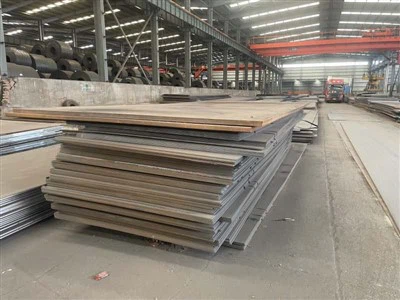
Hey there! As a cold rolled steel supplier, I often get asked all sorts of questions about the products we offer. One question that pops up more than you'd think is, "What is the specific heat capacity of cold rolled steel?" Well, let's dive right into it.
First off, let's understand what specific heat capacity actually means. Specific heat capacity is the amount of heat energy required to raise the temperature of a unit mass of a substance by one degree Celsius (or one Kelvin, since the size of a degree is the same in both scales). In simpler terms, it tells us how much heat a material can absorb before its temperature goes up.
Now, for cold rolled steel. Cold rolled steel is a type of steel that has been processed at room temperature after being hot rolled. This process gives it a smoother surface finish, closer dimensional tolerances, and improved strength compared to hot rolled steel.
The specific heat capacity of cold rolled steel is typically around 0.46 J/g°C. That means it takes about 0.46 joules of energy to raise the temperature of one gram of cold rolled steel by one degree Celsius. But it's important to note that this value can vary a bit depending on the exact composition of the steel. Different alloys and impurities in the steel can slightly change its specific heat capacity.
For example, if you've got a piece of cold rolled steel that's alloyed with elements like nickel or chromium, the specific heat capacity might be a bit different. These alloying elements can affect how the steel atoms interact with heat energy.


Why does the specific heat capacity matter? Well, it has a lot of practical applications. In industries where heat transfer is crucial, like automotive manufacturing or construction, knowing the specific heat capacity of cold rolled steel helps engineers design better products.
In automotive manufacturing, for instance, cold rolled steel is used in many parts of a car, from the body panels to the engine components. When the engine is running, it generates a lot of heat. The specific heat capacity of the cold rolled steel used in the engine parts determines how well they can handle that heat without getting damaged. If the specific heat capacity is too low, the parts might overheat quickly, leading to premature wear and tear.
In construction, cold rolled steel is often used in building frames and structural components. When a building is exposed to extreme temperatures, either hot or cold, the specific heat capacity of the steel affects how the building responds. A higher specific heat capacity means the steel can absorb more heat without a significant increase in temperature, which can help keep the building more stable in different weather conditions.
Now, as a cold rolled steel supplier, we know that our customers need reliable and high - quality products. That's why we make sure to source our cold rolled steel from top - notch manufacturers. We also have a wide range of products to meet different customer needs. Whether you're looking for thin sheets or thick plates, we've got you covered.
One of our popular products is Steel Plate Cold Rolled. These plates are made from high - grade cold rolled steel and are perfect for various applications. They have excellent surface finish and mechanical properties, making them suitable for both industrial and commercial use.
If you're in the market for cold rolled steel, you might be wondering how to choose the right product. Here are a few things to consider. First, think about the application. What will you be using the steel for? If it's for a high - heat application, like a furnace lining, you'll want to pay close attention to the specific heat capacity and other heat - related properties.
Second, consider the thickness and size. Different projects require different thicknesses of cold rolled steel. We can provide you with a variety of thicknesses and sizes to ensure that you get the perfect fit for your project.
Third, look at the quality. At our company, we take quality seriously. We have strict quality control measures in place to make sure that every piece of cold rolled steel we supply meets the highest standards.
We also offer great customer service. Our team of experts is always ready to answer your questions and help you find the right product. Whether you're a small business owner or a large corporation, we treat every customer with the same level of care and attention.
If you're interested in our cold rolled steel products, don't hesitate to get in touch. We'd love to have a chat with you about your needs and see how we can help. Whether you have a big project coming up or just need a small amount of steel for a DIY project, we're here to assist. You can reach out to us, and we'll start the process of getting you the right cold rolled steel products.
In conclusion, the specific heat capacity of cold rolled steel is an important property that affects its performance in various applications. As a cold rolled steel supplier, we understand the significance of this property and strive to provide our customers with the best products. So, if you're in the market for cold rolled steel, give us a chance, and we'll show you why we're the go - to choice for many businesses.
References
- "Materials Science and Engineering: An Introduction" by William D. Callister Jr. and David G. Rethwisch
- Various industry reports on cold rolled steel properties