


In the demanding fields of shipbuilding and offshore engineering, the selection of appropriate steel plates is crucial for ensuring the safety, durability, and performance of vessels and offshore structures. EH36 steel plates approved by major classification societies such as the American Bureau of Shipping (ABS), Lloyd's Register (LR), and Det Norske Veritas (DNV) have emerged as a popular choice due to their excellent mechanical properties, especially in terms of toughness. As a supplier of EH36 Steel Plate ABS/LR/DNV Approved for Shipbuilding & Offshore, I am well - versed in the performance of these steel plates and will delve into their toughness characteristics in this blog.
Understanding EH36 Steel Plate and Classification Society Approvals
EH36 is a high - strength, low - alloy (HSLA) steel plate that is widely used in shipbuilding and offshore applications. The "E" in EH36 indicates its excellent toughness, particularly at low temperatures. The "H" stands for high strength, and "36" represents the minimum yield strength of 36,000 psi (248 MPa).

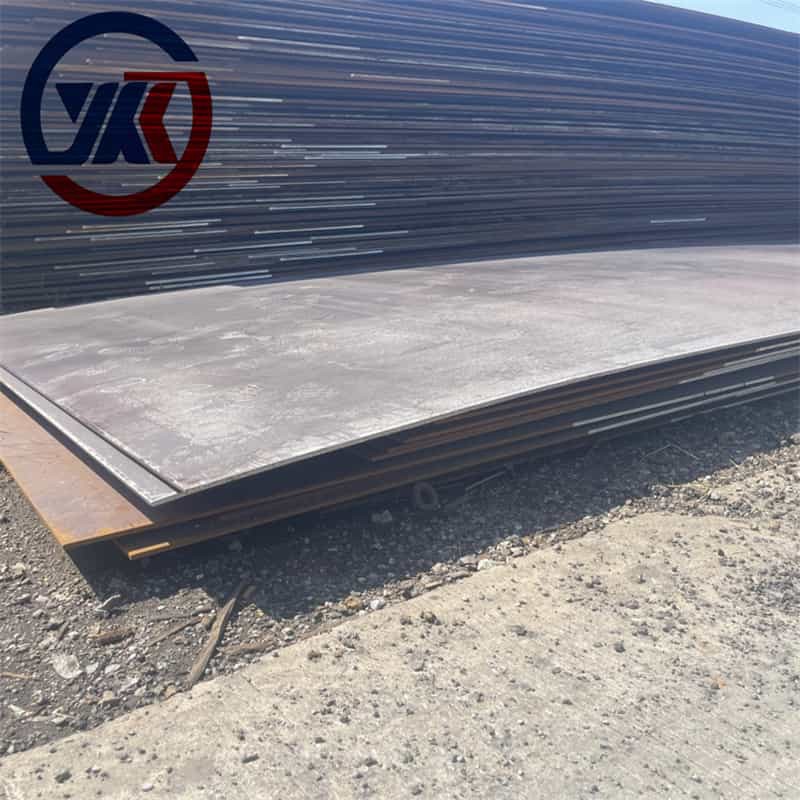
Approvals from ABS, LR, and DNV are highly regarded in the maritime industry. These classification societies set strict standards for the design, construction, and maintenance of ships and offshore structures. When an EH36 steel plate is approved by these organizations, it means that the steel has met their rigorous requirements for chemical composition, mechanical properties, and manufacturing processes.
Toughness in Shipbuilding and Offshore Applications
Toughness is a critical property in shipbuilding and offshore engineering. In these environments, structures are exposed to a variety of harsh conditions, including high - impact loads, extreme temperatures, and corrosive seawater. A steel plate with high toughness can resist cracking and fracture under these conditions, ensuring the integrity of the structure.
Impact Resistance
One of the key aspects of toughness is impact resistance. Ships and offshore platforms often experience impact loads from waves, collisions with icebergs or other vessels, and the dropping of heavy equipment. EH36 steel plates approved by ABS, LR, and DNV are designed to have high impact resistance, which is typically measured by the Charpy V - notch impact test.
The Charpy test involves striking a notched specimen of the steel with a pendulum at a specific temperature. The energy absorbed by the specimen during the impact is a measure of its toughness. EH36 steel plates are required to meet minimum Charpy impact energy requirements at low temperatures, usually - 40°C (- 40°F) or lower, depending on the classification society's standards. This ensures that the steel can withstand sudden impact loads even in cold and harsh environments.
Crack Propagation Resistance
In addition to impact resistance, crack propagation resistance is also important for the safety of ship and offshore structures. Once a crack initiates in a steel plate, it can propagate under cyclic loading, leading to catastrophic failure. EH36 steel plates with high toughness have the ability to resist crack propagation, which is crucial for preventing the spread of damage in the structure.
The fracture toughness of EH36 steel is often evaluated using tests such as the compact tension test. This test measures the stress intensity factor at which a crack in the steel begins to propagate. Steel plates with high fracture toughness can withstand higher stress intensity factors before crack propagation occurs, providing an extra layer of safety for the structure.
How ABS, LR, and DNV Approvals Ensure Toughness
The approval processes of ABS, LR, and DNV play a significant role in ensuring the toughness of EH36 steel plates. These classification societies conduct thorough inspections and tests during the manufacturing process to verify that the steel meets their standards.
Chemical Composition Control
The chemical composition of EH36 steel has a direct impact on its toughness. ABS, LR, and DNV specify strict limits on the content of elements such as carbon, manganese, silicon, sulfur, and phosphorus. For example, a low sulfur content is essential for improving the toughness of the steel, as sulfur can form brittle sulfide inclusions that reduce the steel's resistance to cracking.
By controlling the chemical composition, these classification societies ensure that the EH36 steel plates have the optimal combination of elements to achieve high toughness.
Heat Treatment and Manufacturing Processes
Heat treatment is another important factor in determining the toughness of EH36 steel plates. ABS, LR, and DNV require that the steel plates undergo specific heat treatment processes, such as quenching and tempering, to improve their mechanical properties.
During the quenching process, the steel is rapidly cooled from a high temperature to a low temperature, which forms a fine - grained microstructure. This fine - grained microstructure enhances the toughness of the steel by increasing its resistance to crack initiation and propagation. The subsequent tempering process relieves the internal stresses in the steel and further improves its toughness and ductility.
In addition to heat treatment, the manufacturing processes of the steel plates, such as rolling and forging, are also closely monitored by the classification societies. Proper rolling and forging can ensure a uniform microstructure and improve the overall quality of the steel plates, which is essential for achieving high toughness.
Comparison with Other Shipbuilding Steel Plates
To better understand the performance of EH36 steel plates in terms of toughness, it is useful to compare them with other commonly used shipbuilding steel plates.
CCS Grade B Shipbuilding Steel Plate
CCS Grade B Shipbuilding Steel Plate is a lower - strength steel plate compared to EH36. While it is suitable for some less demanding shipbuilding applications, its toughness is generally lower than that of EH36. CCS Grade B steel plates typically have a lower minimum yield strength and may not meet the same low - temperature impact requirements as EH36 steel plates.
D36 Shipbuilding Steel Plate
D36 Shipbuilding Steel Plate is similar to EH36 in terms of strength, but its toughness may vary. D36 steel plates are also used in shipbuilding and offshore applications, but the EH36 steel plates approved by ABS, LR, and DNV often have more stringent requirements for toughness, especially at low temperatures.
ABS Grade A Steel Plate
ABS Grade A Steel Plate is a basic shipbuilding steel with relatively lower strength and toughness compared to EH36. It is commonly used in less critical parts of ships, such as decks and bulkheads. EH36 steel plates, on the other hand, are used in more demanding applications where high toughness and strength are required, such as the hulls of large vessels and offshore platforms.
Real - World Applications and Case Studies
In real - world shipbuilding and offshore projects, EH36 steel plates approved by ABS, LR, and DNV have proven their performance in terms of toughness. For example, in Arctic shipping, where vessels are exposed to extremely low temperatures and ice - related impacts, EH36 steel plates have been used to construct the hulls of ice - class ships. These steel plates have withstood the harsh conditions and provided reliable protection for the vessels.
In offshore oil and gas platforms, EH36 steel plates are used in the construction of the jacket structures, which support the platform and are subject to high - impact loads from waves and wind. The high toughness of EH36 steel plates ensures the long - term integrity of these structures, reducing the risk of failure and ensuring the safety of the platform and its personnel.
Conclusion and Call to Action
In conclusion, EH36 steel plates approved by ABS, LR, and DNV offer excellent toughness in shipbuilding and offshore applications. Their high impact resistance and crack propagation resistance make them suitable for use in harsh environments where the safety and durability of structures are of utmost importance.
If you are in the market for high - quality EH36 steel plates for your shipbuilding or offshore project, I encourage you to contact us for a detailed discussion. Our team of experts can provide you with the technical support and product information you need to make an informed decision. We are committed to providing the best - quality EH36 steel plates that meet the strict standards of ABS, LR, and DNV.
References
- American Bureau of Shipping (ABS). Rules for Building and Classing Steel Vessels.
- Lloyd's Register (LR). Rules and Regulations for the Classification of Ships.
- Det Norske Veritas (DNV). Rules for Classification of Ships.
- Various research papers on the mechanical properties of high - strength low - alloy steels in shipbuilding and offshore applications.


