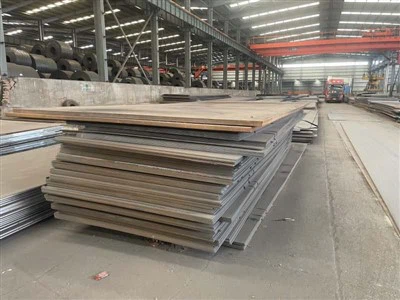
Hey there! As a supplier of S355J2WP Steel Plate, I often get asked about the thickness of the protective layer on this steel plate. So, I thought I'd write this blog to share some insights and clear up any confusion.
First off, let's talk a bit about what S355J2WP steel plate is. S355J2WP is a type of weathering steel, which means it has enhanced resistance to atmospheric corrosion compared to regular steel. This is thanks to the addition of certain alloying elements like copper, chromium, and nickel. It's commonly used in outdoor structures such as bridges, buildings, and containers. If you're interested in learning more about this specific steel plate, you can check out S355J2WP Steel Plate.
Now, let's get to the main question: what's the thickness of the protective layer on S355J2WP steel plate? Well, the thickness of the protective layer can vary depending on a few factors.
Factors Affecting the Thickness of the Protective Layer
1. Environmental Conditions
The environment where the steel plate is placed plays a huge role. In a highly corrosive environment, like near the ocean where there's a lot of salt in the air, the steel will react more quickly with the atmosphere. This can lead to the formation of a thicker protective layer over time. On the other hand, in a relatively clean and dry environment, the protective layer may form more slowly and be thinner.


For example, if you install S355J2WP steel plates on a bridge near the coast, the saltwater spray will accelerate the corrosion process. The steel will start to develop a patina, which is the protective layer. This patina will gradually thicken as the steel continues to be exposed to the harsh coastal environment.
2. Exposure Time
The longer the steel plate is exposed to the atmosphere, the thicker the protective layer will become. In the initial stages of exposure, a thin layer of rust-like material starts to form. As time goes on, this layer undergoes a series of chemical reactions and transforms into a more stable and protective layer.
Let's say you install a set of S355J2WP steel plates for a building project. In the first few months, you'll notice a light rusty color starting to appear on the surface. After a year or two, the protective layer will have grown thicker and more pronounced.
3. Surface Treatment
The way the steel plate is treated before installation can also influence the thickness of the protective layer. If the steel plate has been properly cleaned and pre - treated, it can promote the formation of a more uniform and effective protective layer.
Some surface treatments, like sandblasting, can remove any contaminants on the surface of the steel. This allows the steel to react more evenly with the atmosphere, resulting in a better - formed protective layer.
Typical Thickness Range
It's tough to give an exact number for the thickness of the protective layer on S355J2WP steel plate because of the factors mentioned above. However, generally speaking, after a few years of exposure in a typical environment, the protective layer can range from a few micrometers to a couple of millimeters.
In the early stages, say within the first year, the protective layer might be around 10 - 50 micrometers thick. As the years go by, and with continuous exposure, it can reach up to 1 - 2 millimeters. But again, this is just a rough estimate, and the actual thickness can vary significantly.
Benefits of the Protective Layer
The protective layer on S355J2WP steel plate is not just for show. It offers several important benefits:
1. Corrosion Resistance
The main function of the protective layer is to protect the underlying steel from further corrosion. Once the layer is formed, it acts as a barrier between the steel and the corrosive elements in the atmosphere. This significantly extends the lifespan of the steel plate.
2. Aesthetic Appeal
The patina that forms on the steel plate gives it a unique and attractive appearance. It can add a touch of rustic charm to outdoor structures, making them stand out.
3. Low Maintenance
Because the protective layer helps prevent corrosion, there's less need for frequent maintenance. This can save time and money in the long run.
Comparing with Other Steel Plates
If you're considering different types of steel plates, you might be wondering how S355J2WP compares to others. For example, S355J0WP Steel Plate is another type of weathering steel. While both S355J2WP and S355J0WP have good corrosion resistance, S355J2WP has better impact toughness at lower temperatures.
In terms of the protective layer, the formation process and thickness are similar for both types of steel plates under the same environmental conditions. However, the exact composition of the protective layer might vary slightly due to differences in the alloying elements.
S355J2WP Corten Steel Plate is also a popular choice. Corten steel is known for its ability to form a self - protecting layer, and S355J2WP falls into this category. It offers the same benefits in terms of corrosion resistance and aesthetic appeal.
Conclusion
So, in conclusion, the thickness of the protective layer on S355J2WP steel plate is influenced by environmental conditions, exposure time, and surface treatment. While it's hard to give an exact thickness, it generally ranges from a few micrometers to a couple of millimeters over time.
If you're in the market for S355J2WP steel plates, whether it's for a small project or a large - scale construction, I'd be more than happy to help. Just reach out, and we can discuss your specific requirements and how we can meet them.
References
- "Steel Construction Manual", American Institute of Steel Construction
- "Corrosion of Metals", National Association of Corrosion Engineers