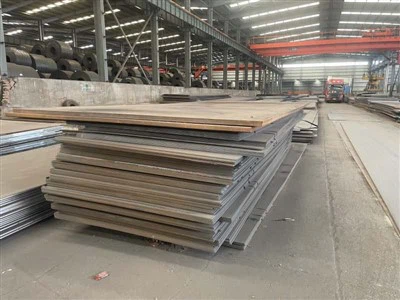
Over the years, I've been in the business of supplying A516GR70 for pressure vessels, and it's been fascinating to witness how this material has evolved. In this blog, I'll share my insights on its journey through time.
Early Days of A516GR70
When A516GR70 first came onto the scene, it was a game - changer in the pressure vessel industry. Back then, the demand for reliable and cost - effective materials for pressure vessels was sky - high. A516GR70 fit the bill perfectly. It was known for its good weldability and relatively high strength, which made it suitable for a wide range of applications.
In the early days, manufacturing processes were a bit more basic. The steel was produced using traditional methods, and the quality control was not as sophisticated as it is today. But even with these limitations, A516GR70 quickly gained popularity. It was used in small - scale pressure vessels for local industries, like food processing and small - time chemical plants.
Technological Advancements in Production
As technology advanced, so did the production of A516GR70. New steelmaking techniques were introduced, such as basic oxygen furnace (BOF) and electric arc furnace (EAF) methods. These methods allowed for more precise control over the chemical composition of the steel.
With better control over the chemical makeup, the properties of A516GR70 improved significantly. The strength and toughness of the material increased, making it suitable for more demanding applications. For example, it started being used in large - scale oil and gas projects. The ability to withstand high pressures and harsh environments became one of its key selling points.


Moreover, the introduction of advanced rolling and heat - treatment processes further enhanced the quality of A516GR70. Rolling mills became more precise, ensuring a more uniform thickness and surface finish. Heat - treatment processes were optimized to improve the microstructure of the steel, which in turn improved its mechanical properties.
Quality Control and Standardization
In the past, quality control was a bit of a hit - or - miss. There were no strict standards in place, and different manufacturers had their own ways of testing the material. This led to some variability in the quality of A516GR70 products.
However, as the industry grew, standardization became crucial. Organizations like ASTM (American Society for Testing and Materials) and ASME (American Society of Mechanical Engineers) stepped in to set clear standards for A516GR70. These standards defined the chemical composition, mechanical properties, and testing procedures for the material.
Today, every batch of A516GR70 that we supply has to meet these strict standards. We have a comprehensive quality control system in place. We test the material for its chemical composition, tensile strength, yield strength, and impact toughness. This ensures that our customers get a consistent and high - quality product every time.
Expansion of Applications
One of the most significant changes in the evolution of A516GR70 is the expansion of its applications. In the beginning, it was mainly used in simple pressure vessels. But now, it's everywhere.
In the oil and gas industry, A516GR70 is used in storage tanks, pipelines, and offshore platforms. Its ability to resist corrosion and high pressure makes it ideal for these applications. For instance, in deep - sea oil drilling, the pressure vessels made from A516GR70 need to withstand extreme pressures and harsh salt - water environments.
The power generation industry also relies heavily on A516GR70. It's used in boilers and steam turbines, where it has to endure high temperatures and pressures. The material's good thermal stability and mechanical strength make it a top choice for these critical components.
Temperature Range and Compatibility
The ASTM A516 Gr 70 Temperature Range is an important aspect of its evolution. In the early days, the temperature limits were more restricted. But with advancements in material science, the temperature range that A516GR70 can handle has expanded.
Now, it can operate effectively in a wide range of temperatures, from cryogenic conditions to high - temperature environments. This has made it even more versatile and suitable for a broader range of applications. For example, in liquefied natural gas (LNG) storage facilities, A516GR70 can withstand the extremely low temperatures required for storing LNG.
Comparison with Similar Materials
Over time, there have been other materials introduced in the market that claim to be alternatives to A516GR70. For example, the SA516Gr.380 Pressure Vessel Plate has similar applications. However, A516GR70 still holds its ground.
A516GR70 offers a better balance between cost and performance. It's more cost - effective than some of the high - end specialty steels, while still providing excellent mechanical properties. Its wide availability and well - established manufacturing processes also give it an edge over some of the newer materials.
The Role of A516GR70 in Modern Projects
In modern projects, especially in the oil, gas, and energy sectors, A516GR70 plays a crucial role. Take large - scale oil refineries, for example. These facilities have numerous pressure vessels, and A516GR70 is the go - to material for many of them.
Our A516GR70 Pressure Vessel Steel Plate – ASME SA516 Gr70 for Oil & Gas Projects meets the strict requirements of these projects. The steel plate is used in the construction of distillation columns, reactors, and storage tanks. Its high strength and good weldability make it easy to fabricate into the complex shapes required for these large - scale projects.
Future Outlook
Looking ahead, I believe that A516GR70 will continue to evolve. With the increasing demand for more efficient and sustainable pressure vessels, there will be a push for further improvements in the material.
We can expect to see more research into enhancing its corrosion resistance, especially in the face of more aggressive environments. There may also be efforts to reduce the weight of the material without sacrificing its strength, which would be beneficial for applications where weight is a critical factor, like in aerospace - related pressure vessels.
Conclusion
In conclusion, the evolution of A516GR70 for pressure vessels has been remarkable. From its humble beginnings to its current status as a widely used material in various industries, it has come a long way. The advancements in production technology, quality control, and application expansion have all contributed to its success.
If you're in the market for high - quality A516GR70 for your pressure vessel projects, don't hesitate to reach out. We're here to provide you with the best products and support. Whether you're working on a small - scale local project or a large - scale international venture, we've got the expertise and the materials to meet your needs. Let's start a conversation about how we can work together to make your project a success.
References
- Industry reports on the evolution of pressure vessel materials
- ASTM and ASME standards for A516GR70
- Technical papers on steelmaking and material science related to A516GR70