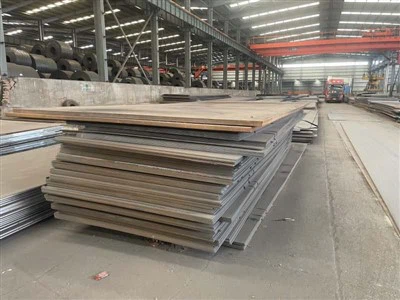
As a supplier of ASME 516 GR.70 Plate Pressure Vessel Plate, I've witnessed firsthand the crucial role this material plays in various industries. Pressure vessels are integral to many processes, from chemical manufacturing to power generation. Understanding how aging affects the properties of ASME 516 GR.70 plates is essential for ensuring the safety and efficiency of these vessels over their service life.
1. Introduction to ASME 516 GR.70 Plate
ASME 516 GR.70 is a carbon steel plate commonly used in pressure vessel applications. It is known for its good weldability, high strength, and excellent notch toughness, especially at low temperatures. These properties make it suitable for a wide range of pressure vessel designs and operating conditions. The A516 Gr 70 Pressure Vessel Steel Plates are often specified in ASME codes due to their reliability and performance.
2. Physical and Mechanical Properties of Fresh ASME 516 GR.70 Plate
When new, ASME 516 GR.70 plates have well - defined physical and mechanical properties. The density of the steel is approximately 7.85 g/cm³, which is typical for carbon steels. In terms of mechanical properties, it has a minimum yield strength of 345 MPa (50 ksi) and a minimum tensile strength of 485 MPa (70 ksi). The elongation at break is usually around 21% in a 2 - inch gauge length. These properties ensure that the plate can withstand the internal pressures and external loads associated with pressure vessel operation.
3. Effects of Aging on Physical Properties
3.1. Density Changes
Over time, the density of ASME 516 GR.70 plates may change slightly. This can be due to factors such as corrosion and the formation of internal defects. Corrosion, for example, can lead to the loss of material from the surface of the plate, reducing its overall mass and potentially changing its density. However, in a well - protected environment, these changes are usually minimal.
3.2. Thermal Conductivity
Aging can also affect the thermal conductivity of the plate. As the steel structure changes due to factors like creep and fatigue, the movement of heat through the material may be altered. This can have implications for the heat transfer efficiency of pressure vessels, which is crucial in applications such as heat exchangers.
4. Effects of Aging on Mechanical Properties
4.1. Yield and Tensile Strength
One of the most significant concerns with aging is the potential reduction in yield and tensile strength. Prolonged exposure to high temperatures, cyclic loading, and corrosive environments can cause microstructural changes in the steel. For instance, creep can lead to the formation of voids and dislocations in the crystal structure, which can weaken the material. As a result, the yield and tensile strength may decrease over time, increasing the risk of failure under pressure.
4.2. Ductility and Toughness
Ductility and toughness are also affected by aging. Ductility, which is the ability of the material to deform plastically before fracture, may decrease as the steel becomes more brittle. This can be due to factors such as precipitation hardening and the growth of microcracks. Similarly, toughness, which is the ability of the material to absorb energy before fracture, may also decline. A reduction in toughness can make the pressure vessel more susceptible to brittle fracture, especially at low temperatures.
4.3. Fatigue Resistance
Pressure vessels are often subjected to cyclic loading, which can lead to fatigue failure. Aging can reduce the fatigue resistance of ASME 516 GR.70 plates. As microcracks form and grow over time, the material becomes more prone to fatigue cracking. The stress concentration at the crack tips can accelerate the crack propagation process, eventually leading to failure.
5. Factors Accelerating Aging
5.1. Temperature
High temperatures can significantly accelerate the aging process. At elevated temperatures, the diffusion rate of atoms in the steel increases, which can lead to microstructural changes such as grain growth and precipitation. These changes can weaken the material and reduce its mechanical properties.
5.2. Corrosion
Corrosion is another major factor that can accelerate aging. When ASME 516 GR.70 plates are exposed to corrosive environments, such as acidic or alkaline solutions, the surface of the steel can be attacked. This can lead to the formation of pits and cracks, which can reduce the cross - sectional area of the plate and increase the stress concentration.
5.3. Cyclic Loading
Cyclic loading, such as pressure fluctuations in a pressure vessel, can cause fatigue damage. Each cycle of loading can introduce small amounts of damage to the material, which accumulates over time. The frequency and amplitude of the cyclic loading can also affect the rate of fatigue damage.
6. Mitigation Strategies
6.1. Material Selection and Design
Proper material selection and design can help mitigate the effects of aging. For example, choosing a higher - quality ASME 516 GR.70 plate with better corrosion resistance and mechanical properties can extend the service life of the pressure vessel. Additionally, designing the pressure vessel with appropriate safety factors can account for the potential degradation of the material over time.


6.2. Inspection and Maintenance
Regular inspection and maintenance are crucial for detecting and addressing aging - related issues. Non - destructive testing methods, such as ultrasonic testing and magnetic particle testing, can be used to detect internal defects and cracks. Maintenance activities, such as surface coating and corrosion protection, can also help prevent further damage.
6.3. Monitoring and Condition Assessment
Continuous monitoring of the pressure vessel's operating conditions, such as temperature, pressure, and corrosion rate, can provide valuable information about the aging process. Condition assessment techniques, such as strain monitoring and acoustic emission monitoring, can be used to detect early signs of damage and predict the remaining service life of the pressure vessel.
7. Comparison with Other Pressure Vessel Plates
It's also interesting to compare ASME 516 GR.70 with other pressure vessel plates, such as P460QH Pressure Vessel Plate and Q345R Steel Plate. P460QH is a European standard pressure vessel plate with high strength and good weldability. It may have different aging characteristics compared to ASME 516 GR.70, especially in terms of its resistance to high - temperature creep. Q345R is a Chinese standard pressure vessel plate, which also has its own unique properties and aging behavior. Understanding these differences can help in choosing the most suitable material for a specific application.
8. Conclusion and Call to Action
In conclusion, aging has a significant influence on the properties of ASME 516 GR.70 Plate Pressure Vessel Plate. The physical and mechanical properties of the plate can change over time, which can affect the safety and performance of pressure vessels. By understanding the factors that accelerate aging and implementing appropriate mitigation strategies, the service life of pressure vessels can be extended.
If you are in the market for high - quality ASME 516 GR.70 Plate Pressure Vessel Plate or need more information about the aging effects and mitigation strategies, please feel free to contact us for a detailed discussion. We are committed to providing the best products and services to meet your pressure vessel needs.
References
- ASME Boiler and Pressure Vessel Code, Section II, Part A, Materials - Ferrous Material Specifications.
- ASTM A516/A516M - 17 Standard Specification for Pressure Vessel Plates, Carbon Steel, for Moderate - and Lower - Temperature Service.
- ASM Handbook, Volume 11: Failure Analysis and Prevention.
- "Corrosion and Protection of Pressure Vessels" by various authors in the field of materials science and engineering.