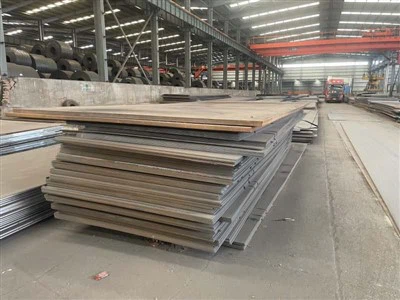
What is the origin of the raw materials for shipbuilding steel plate?
As a supplier of shipbuilding steel plates, I often get asked about the origin of the raw materials that go into making these essential components for the maritime industry. Shipbuilding steel plates are crucial for constructing various types of vessels, from small boats to large ocean - going ships, and understanding the origin of their raw materials is key to appreciating the quality and reliability of the final product.
The Primary Raw Material: Iron Ore
The foundation of shipbuilding steel plates is iron ore. Iron ore is a naturally occurring mineral aggregate that contains iron in varying concentrations. The most common types of iron ore used in steelmaking are hematite (Fe₂O₃) and magnetite (Fe₃O₄). These ores are mined from large deposits around the world.
Some of the major iron - ore producing regions include Australia, Brazil, and China. Australia is one of the leading exporters of iron ore, with vast deposits in Western Australia. The iron ore mined here is of high quality, with a relatively high iron content. Brazilian iron ore is also highly regarded in the global market, known for its rich reserves and good chemical properties. China, on the other hand, not only mines a large amount of iron ore for its domestic steel industry but also imports significant quantities to meet the growing demand.
Once the iron ore is mined, it is typically crushed and processed to remove impurities and increase the iron content. This processed ore is then ready to be used in the steel - making process.
Other Key Raw Materials
In addition to iron ore, several other raw materials are essential for producing shipbuilding steel plates.
Coal
Coal plays a vital role in the steel - making process. Specifically, coking coal is used to produce coke, which is a key fuel and reducing agent in the blast furnace. Coke provides the heat necessary to melt the iron ore and also helps to remove oxygen from the ore, converting it into iron. Coal mines around the world supply coking coal. Countries like Australia, the United States, and Russia are major exporters of coking coal.
Limestone
Limestone is another important raw material. It is added to the blast furnace to act as a flux. The flux helps to remove impurities such as silica and sulfur from the iron ore and coke mixture during the smelting process. Limestone is widely available and is mined in many regions across the globe. It reacts with the impurities to form slag, which can be easily separated from the molten iron.


Alloying Elements
Shipbuilding steel plates often require specific alloying elements to enhance their properties. For example, elements like manganese, silicon, nickel, chromium, and molybdenum may be added in varying proportions. Manganese improves the strength and hardness of the steel, while nickel enhances its toughness and corrosion resistance. These alloying elements are sourced from mines around the world, depending on the abundance of the particular element in the region.
The Steel - Making Process
The process of converting these raw materials into shipbuilding steel plates primarily involves two main methods: the blast furnace - basic oxygen furnace (BF - BOF) route and the electric arc furnace (EAF) route.
Blast Furnace - Basic Oxygen Furnace Route
In the BF - BOF route, iron ore, coke, and limestone are fed into a blast furnace. Hot air is blown into the furnace, causing the coke to burn and produce carbon monoxide. This carbon monoxide then reacts with the iron ore, reducing it to molten iron. The molten iron, known as hot metal, is then transferred to a basic oxygen furnace. In the BOF, pure oxygen is blown into the hot metal to remove impurities such as carbon, silicon, and phosphorus. Alloying elements are added at this stage to achieve the desired chemical composition and properties of the steel.
Electric Arc Furnace Route
The EAF route uses scrap steel as the primary raw material. Scrap steel is melted in an electric arc furnace using high - intensity electric arcs. The advantage of the EAF route is that it is more energy - efficient and has a lower environmental impact compared to the BF - BOF route. However, for high - quality shipbuilding steel plates, a combination of scrap steel and some virgin iron may be used to ensure the desired properties.
Quality Assurance and Traceability
As a shipbuilding steel plate supplier, we place great emphasis on quality assurance and traceability. We work closely with our raw material suppliers to ensure that the iron ore, coal, and other materials meet the strict quality standards required for shipbuilding. We conduct regular inspections and testing at every stage of the production process, from the raw material sourcing to the final steel plate manufacturing.
Traceability is also crucial. We keep detailed records of the origin of all raw materials used in our shipbuilding steel plates. This allows us to provide our customers with information about the source and quality of the materials, which is important for compliance with international standards and regulations in the shipbuilding industry.
Our Product Range
We offer a wide range of shipbuilding steel plates to meet the diverse needs of our customers. Our product portfolio includes CCS A Shipbuilding Steel Plate, DH32 Shipbuilding Steel Plate, and AH32 Shipbuilding Steel Plate. These steel plates are manufactured using high - quality raw materials and advanced production techniques to ensure excellent mechanical properties, such as high strength, good toughness, and corrosion resistance.
Contact for Procurement
If you are in the market for high - quality shipbuilding steel plates, we invite you to contact us for procurement discussions. We are committed to providing our customers with the best products and services. Our team of experts is ready to assist you in selecting the right steel plates for your specific shipbuilding projects. Whether you are building a small coastal vessel or a large ocean - going tanker, we have the solutions to meet your requirements.
References
- Steelmaking: Theory and Practice, by G. Thomas and J.K. Brimacombe.
- Shipbuilding Technology Handbook, edited by various industry experts.
- International Maritime Organization (IMO) standards and guidelines related to shipbuilding materials.