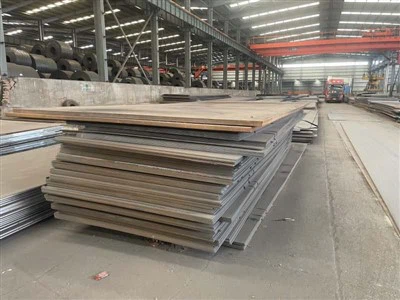
Phosphorus is a crucial alloying element in S355J2WP steel plate, playing multiple significant roles that enhance the steel's performance and properties. As a reliable supplier of S355J2WP Steel Plate, I am well - versed in the science behind this material and eager to share insights into the role of phosphorus.
1. Strengthening the Steel Matrix
One of the primary functions of phosphorus in S355J2WP steel plate is to strengthen the steel matrix. Phosphorus atoms can dissolve in the iron lattice, causing lattice distortion. This distortion makes it more difficult for dislocations to move within the steel structure. Dislocations are line defects in the crystal lattice of metals, and their movement is closely related to the deformation of the material. When the movement of dislocations is restricted, the steel becomes stronger and more resistant to plastic deformation.
In S355J2WP steel, this strengthening effect helps the plate to withstand higher mechanical loads. For example, in construction projects where the steel plates are used for building structures, bridges, or machinery parts, the enhanced strength provided by phosphorus ensures the structural integrity and safety of the final product. The steel can better resist the forces exerted on it during normal operation, such as the weight of the structure itself, wind loads, and dynamic forces from moving machinery.
2. Improving Corrosion Resistance
Phosphorus also plays a vital role in improving the corrosion resistance of S355J2WP steel plate. This is of particular importance as S355J2WP is a type of Weathering Steel Plate, which is designed to develop a protective rust layer over time. Phosphorus promotes the formation of a dense and adherent rust layer on the surface of the steel.
When the steel is exposed to the atmosphere, the initial oxidation process occurs. Phosphorus in the steel influences the chemical reactions during this oxidation. It helps to form a more stable and uniform rust layer that acts as a barrier between the underlying steel and the corrosive environment. This rust layer, also known as patina, can effectively prevent further penetration of oxygen, water, and other corrosive agents into the steel. As a result, the corrosion rate of S355J2WP steel plate is significantly reduced compared to ordinary carbon steels.
For outdoor applications, such as sculptures, facades of buildings, and railway wagons, the improved corrosion resistance provided by phosphorus means that the steel plates can maintain their appearance and structural integrity for a longer period without the need for frequent painting or other protective coatings. This not only reduces the maintenance costs but also makes the use of S355J2WP steel more environmentally friendly.
3. Influence on Weldability
The presence of phosphorus in S355J2WP steel plate has a complex influence on its weldability. On one hand, a certain amount of phosphorus can improve the fluidity of the molten metal during the welding process. This is beneficial because it allows the weld metal to fill the joint more easily and form a better - shaped weld bead.
However, excessive phosphorus can have a negative impact on weldability. High levels of phosphorus can increase the risk of cold cracking in the weld area. Cold cracking occurs when the weld metal cools and solidifies, and the internal stresses exceed the strength of the material. Phosphorus can also cause embrittlement of the weld, reducing its toughness and ductility. Therefore, in the production of S355J2WP steel, the content of phosphorus is carefully controlled to balance the positive and negative effects on weldability.
4. Impact on Microstructure
Phosphorus affects the microstructure of S355J2WP steel plate. During the solidification process of the molten steel, phosphorus can segregate at the grain boundaries. This segregation can influence the growth and morphology of the grains in the steel. In some cases, it can promote the formation of fine - grained microstructures.


A fine - grained microstructure generally leads to improved mechanical properties of the steel, such as higher strength and better ductility. The fine grains can also enhance the steel's resistance to fatigue, which is important for applications where the steel is subjected to cyclic loading, such as in the construction of bridges and offshore platforms.
Comparison with Other Elements
It is also important to consider the interaction of phosphorus with other alloying elements in S355J2WP steel. For example, copper is another key element in this steel, and it works synergistically with phosphorus to improve corrosion resistance. Copper can form a protective film on the steel surface, and phosphorus helps to stabilize this film and make it more adherent.
Manganese is also present in S355J2WP steel. Manganese can improve the strength and toughness of the steel, and it can also reduce the harmful effects of sulfur. The interaction between phosphorus and manganese can affect the overall mechanical properties and corrosion resistance of the steel. For instance, a proper balance between phosphorus and manganese can optimize the strength - toughness ratio of the steel.
Quality Control in Production
As a supplier of S355J2WP Corten Steel Plate, we pay great attention to the control of phosphorus content in the steel. We use advanced testing methods, such as spectroscopy analysis, to accurately measure the phosphorus content in each batch of steel. This ensures that the steel meets the strict quality standards required for various applications.
We also have a comprehensive quality control system in place during the production process. From the selection of raw materials to the final heat treatment, every step is carefully monitored to ensure the stability and consistency of the steel's properties. This includes controlling the addition of phosphorus and other alloying elements to achieve the desired chemical composition.
Applications
The unique properties of S355J2WP steel plate, enhanced by the role of phosphorus, make it suitable for a wide range of applications. In the construction industry, it is widely used for building structures, such as high - rise buildings, industrial plants, and stadiums. The high strength and corrosion resistance of the steel ensure the long - term durability of these structures.
In the transportation industry, S355J2WP steel is used for manufacturing railway wagons, shipping containers, and automotive parts. The ability to withstand harsh environmental conditions and mechanical stresses makes it an ideal material for these applications.
Conclusion
In conclusion, phosphorus plays a multi - faceted role in S355J2WP steel plate. It strengthens the steel matrix, improves corrosion resistance, has a complex influence on weldability, and impacts the steel's microstructure. The careful control of phosphorus content, along with other alloying elements, is crucial for achieving the optimal performance of the steel.
As a leading supplier of S355J2WP Steel Plate, we are committed to providing high - quality products that meet the diverse needs of our customers. Whether you are involved in construction, transportation, or other industries, our S355J2WP steel plates can offer reliable solutions. If you are interested in purchasing our products or have any questions about S355J2WP steel, please feel free to contact us for a detailed discussion and quote.
References
- Davis, J. R. (Ed.). (1996).ASM Specialty Handbook: Steel Heat Treating Fundamentals and Processes. ASM International.
- Reed, R. C. (2006). The Superalloys: Fundamentals and Applications. Cambridge University Press.
- Degarmo, E. P.,Black, J. T., & Kohser, R. A. (2003). Materials and Processes in Manufacturing. Wiley.