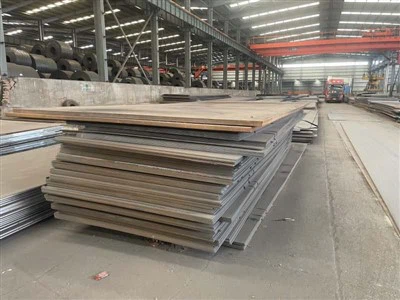
In the realm of shipbuilding, the demand for steel plates with exceptional anti - wave properties is ever - increasing. As a dedicated supplier of steel plates for shipbuilding, I understand the significance of this requirement and am fully committed to exploring effective ways to enhance these anti - wave capabilities. In this blog, I will share some insights on how to improve the anti - wave properties of shipbuilding steel plates.
1. Material Selection and Optimization
The very foundation of improving anti - wave properties lies in the selection of appropriate steel materials. Different grades of steel offer distinct characteristics, and choosing the right one can significantly impact the plate's performance against waves.
For instance, FH32 Shipbuilding Steel Plate is known for its high strength and good toughness. It contains specific alloying elements that enhance its ability to withstand the dynamic loads exerted by waves. Similarly, AH36 Shipbuilding Steel Plate is a popular choice. The addition of elements like manganese and silicon in AH36 not only increases its strength but also improves its formability, which is crucial when shaping the plates for various ship components.
Moreover, AH36, DH36, EH36 Steel Plate For Shipbuilding offer a range of options with different levels of strength and toughness. These plates are designed to meet the diverse needs of shipbuilding projects, and by carefully selecting the appropriate grade based on the expected wave conditions of the ship's operating area, we can optimize the anti - wave performance.
Another high - performance option is EH40 Ship Steel Plate. It has excellent low - temperature toughness and high yield strength, making it suitable for ships operating in harsh marine environments with large waves.
2. Microstructural Control
The microstructure of steel plates plays a vital role in determining their mechanical properties, including anti - wave performance. Through advanced heat treatment processes, we can precisely control the microstructure of the steel.
Normalizing is a common heat treatment method. By heating the steel plate to a specific temperature and then air - cooling it, we can refine the grain structure. A finer grain structure generally leads to improved strength, toughness, and fatigue resistance. This is particularly important for withstanding the repeated impact and stress caused by waves.
Quenching and tempering are more complex heat treatment processes. Quenching involves rapid cooling of the heated steel, which can significantly increase its strength. However, this also makes the steel brittle. Tempering is then carried out to relieve the internal stress and improve the toughness, achieving a good balance between strength and toughness.
For example, in the production of high - strength shipbuilding steel plates, we can use a combination of quenching and tempering to obtain a martensitic - bainitic microstructure. This microstructure provides excellent mechanical properties, enabling the steel plate to better resist the forces exerted by waves.
3. Plate Design and Geometry
The design and geometry of the steel plate can also have a profound impact on its anti - wave properties.
Curved plates are often used in shipbuilding. The curvature can distribute the wave forces more evenly across the plate surface, reducing the stress concentration at specific points. This helps to prevent local deformation and cracking, thereby enhancing the overall anti - wave performance.


In addition, the thickness and shape of the plate need to be carefully considered. Thicker plates generally have higher stiffness and can better withstand the impact of waves. However, increasing the thickness also adds weight to the ship, which may affect its fuel efficiency and maneuverability. Therefore, a balance needs to be struck between thickness and other performance requirements.
The shape of the plate can also be optimized to reduce the drag force caused by waves. Streamlined shapes can minimize the resistance of the ship when moving through waves, improving the overall efficiency and stability of the ship.
4. Surface Treatment and Coating
Surface treatment and coating are effective ways to protect the steel plate and enhance its anti - wave performance.
A proper coating can prevent corrosion, which is a major concern in the marine environment. Corrosion can weaken the steel plate, reducing its strength and toughness. By applying anti - corrosion coatings, such as epoxy coatings, we can extend the service life of the steel plate and maintain its anti - wave properties.
In addition, some special coatings can also improve the surface smoothness of the steel plate. A smoother surface reduces the frictional resistance between the plate and the water, which helps the ship to move more smoothly through waves.
Surface hardening treatments, such as nitriding or carburizing, can also be used to increase the surface hardness of the steel plate. This can improve the wear resistance of the plate when it is in contact with the water and debris carried by waves.
5. Quality Control and Testing
Ensuring the quality of the steel plates is essential for achieving good anti - wave properties.
We implement strict quality control measures throughout the production process. From raw material inspection to the final product testing, every step is carefully monitored. Non - destructive testing methods, such as ultrasonic testing and magnetic particle testing, are used to detect internal defects in the steel plate.
Mechanical testing, including tensile testing, impact testing, and hardness testing, is also carried out to ensure that the steel plate meets the required mechanical properties. By conducting these tests, we can identify any potential issues and take corrective actions in a timely manner.
Classification and Standards
Understanding the Classification Of Shipbuilding Plates is crucial for both shipbuilders and suppliers. Different classification societies have established strict standards and regulations for shipbuilding steel plates. These standards cover aspects such as chemical composition, mechanical properties, and manufacturing processes.
By complying with these standards, we can ensure the quality and performance of our steel plates. For example, the International Association of Classification Societies (IACS) has developed a set of unified requirements for shipbuilding steel. Adhering to these requirements can help us produce steel plates that are suitable for a wide range of shipbuilding applications and can effectively resist the forces of waves.
Conclusion
Improving the anti - wave properties of shipbuilding steel plates is a complex and multi - faceted task. It requires a comprehensive approach that includes material selection, microstructural control, plate design, surface treatment, quality control, and compliance with classification standards.
As a supplier of steel plates for shipbuilding, I am dedicated to continuously improving our products and services. By leveraging the latest technologies and industry best practices, we can provide high - quality steel plates that meet the demanding requirements of the shipbuilding industry.
If you are in the market for shipbuilding steel plates and want to discuss how we can meet your specific needs in terms of anti - wave properties, please feel free to engage with us for a procurement discussion. We are eager to collaborate with you to build ships that are both safe and efficient.
References
- Some literature on shipbuilding materials research.
- Reports on the standards and classification of shipbuilding steel plates from classification societies.
- Technical papers on heat treatment and surface treatment of steel for shipbuilding.