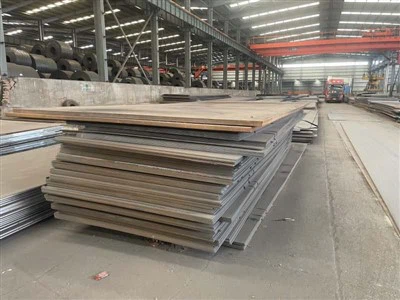
In the realm of steel manufacturing and engineering, S355J2WP steel plate has gained significant attention for its remarkable properties, especially its weather resistance. As a trusted supplier of S355J2WP Steel Plate, I am often asked about the various elements that contribute to its unique characteristics. One such element is sulfur, which plays a multifaceted role in the performance and quality of S355J2WP steel plate. In this blog, we will delve into the specific functions of sulfur in this type of steel and understand how it impacts the overall properties of the material.
Understanding S355J2WP Steel Plate
Before we discuss the role of sulfur, it is essential to have a basic understanding of S355J2WP steel plate. This steel belongs to the category of weathering steel, which is designed to form a protective rust layer when exposed to the atmosphere. This rust layer, also known as patina, acts as a barrier against further corrosion, making the steel highly suitable for outdoor applications such as bridges, buildings, and railway wagons.
S355J2WP steel plate is defined by the European standard EN 10025-5. It has a minimum yield strength of 355 MPa and offers good weldability and formability. The "J2" designation indicates its impact toughness at -20°C, while the "WP" stands for weathering properties. The chemical composition of S355J2WP includes elements such as carbon, silicon, manganese, phosphorus, sulfur, chromium, nickel, and copper, each of which contributes to the steel's overall performance.
The Role of Sulfur in S355J2WP Steel Plate
Sulfur is generally considered an impurity in most steels, as it can have detrimental effects on the mechanical properties of the material. However, in S355J2WP steel plate, sulfur is present in controlled amounts, and it plays several important roles:
1. Machinability
One of the primary benefits of sulfur in S355J2WP steel plate is its ability to improve machinability. Sulfur forms manganese sulfide (MnS) inclusions in the steel matrix. These inclusions act as chip breakers during machining operations, such as turning, drilling, and milling. By reducing the length of the chips, sulfur helps to prevent them from getting entangled in the cutting tool, leading to smoother machining processes and improved surface finish.
In addition, the presence of MnS inclusions can also reduce the friction between the cutting tool and the workpiece, resulting in lower cutting forces and extended tool life. This makes S355J2WP steel plate easier and more cost - effective to machine, which is particularly important for applications that require complex shapes and precise dimensions.
2. Impact on Weldability
While sulfur is generally known to have a negative impact on weldability in some steels, in S355J2WP, its influence is carefully managed. The controlled amount of sulfur in the steel is designed to have minimal adverse effects on the welding process. When welding S355J2WP steel plate, the formation of MnS inclusions can actually help to prevent hot cracking.
Hot cracking occurs when the weld metal solidifies and contracts, creating internal stresses that can lead to cracks. The MnS inclusions act as nucleation sites for the formation of fine - grained structures in the weld metal, which helps to relieve these stresses and reduce the risk of hot cracking. However, it is important to note that the sulfur content must be kept within a specific range to ensure optimal weldability.
3. Influence on Corrosion Resistance
Although sulfur is not a major contributor to the corrosion resistance of S355J2WP steel plate, its presence in the steel can have a secondary effect on the formation of the protective patina. The MnS inclusions can act as sites for the initiation of corrosion, but they also play a role in the development of the patina layer.
As the steel is exposed to the atmosphere, the MnS inclusions react with oxygen and moisture, which can lead to the formation of iron sulfides. These iron sulfides can participate in the electrochemical reactions that contribute to the formation of the patina. However, if the sulfur content is too high, it can also lead to the formation of porous and non - protective rust layers, which can reduce the overall corrosion resistance of the steel. Therefore, maintaining the appropriate sulfur content is crucial for ensuring the long - term corrosion resistance of S355J2WP steel plate.
Comparing S355J2WP with Other Weathering Steels
When considering S355J2WP steel plate, it is interesting to compare it with other weathering steels such as S355J0WP Steel Plate, S355J0WP Corten Steel Plate, and general Weathering Steel Plate. The differences in their sulfur content and other alloying elements can result in variations in their performance.
For example, S355J2WP has a higher impact toughness at lower temperatures compared to S355J0WP due to the "J2" designation. In terms of sulfur content, all these steels have a controlled amount, but the exact percentage can vary depending on the manufacturing process and the specific requirements of the application. The sulfur in each of these steels contributes to their machinability and can have a similar impact on weldability and corrosion resistance, but the overall performance is also influenced by the combination of other elements.
Quality Control of Sulfur Content in S355J2WP Steel Plate
As a supplier of S355J2WP steel plate, we understand the importance of quality control when it comes to the sulfur content. We use advanced metallurgical techniques to accurately measure and control the sulfur percentage in our steel products. Our production process starts with high - quality raw materials, and during the steelmaking process, we carefully monitor and adjust the sulfur content to ensure that it meets the strict standards of EN 10025 - 5.
We conduct regular chemical analyses of our steel plates using methods such as optical emission spectroscopy and X - ray fluorescence spectroscopy. These techniques allow us to quickly and accurately determine the sulfur content and other chemical elements in the steel. In addition, we also perform mechanical tests, including impact tests and tensile tests, to ensure that the steel meets the required mechanical properties despite the presence of sulfur.
Applications of S355J2WP Steel Plate
The unique combination of properties offered by S355J2WP steel plate makes it suitable for a wide range of applications. The improved machinability due to sulfur allows for the production of complex components, while the weather resistance makes it ideal for outdoor structures.


In the construction industry, S355J2WP steel plate is commonly used for building facades, bridges, and industrial structures. Its ability to form a protective patina without the need for additional coatings reduces the maintenance cost and extends the service life of these structures. In the transportation industry, it is used for manufacturing railway wagons and containers, where corrosion resistance and good mechanical properties are essential.
Conclusion and Call to Action
In conclusion, sulfur plays a crucial role in S355J2WP steel plate, influencing its machinability, weldability, and corrosion resistance. As a supplier, we ensure that the sulfur content in our S355J2WP Steel Plate is carefully controlled to optimize these properties and meet the needs of our customers.
If you are in the market for high - quality Corrosion Resistant Steel Plate for your next project, we encourage you to reach out to us. Our team of experts can provide you with detailed information about the composition, properties, and applications of our S355J2WP steel plate. We are committed to delivering top - notch products and excellent customer service. Contact us to discuss your specific requirements and start a successful partnership.
References
- EN 10025 - 5:2004, Hot rolled products of structural steels - Part 5: Technical delivery conditions for structural steels with improved atmospheric corrosion resistance.
- Dewey, H. J., & Pickering, F. B. (1971). Corrosion - Resistant Low - Alloy Steels. Iron and Steel Institute.
- Totten, G. E., & MacKenzie, D. S. (2003). Handbook of Aluminum Vol. 3: Applications and Design. ASM International.